
How to Get Rid of Dog Pee Smell in Your Yard
By Matt Tackett, Owner
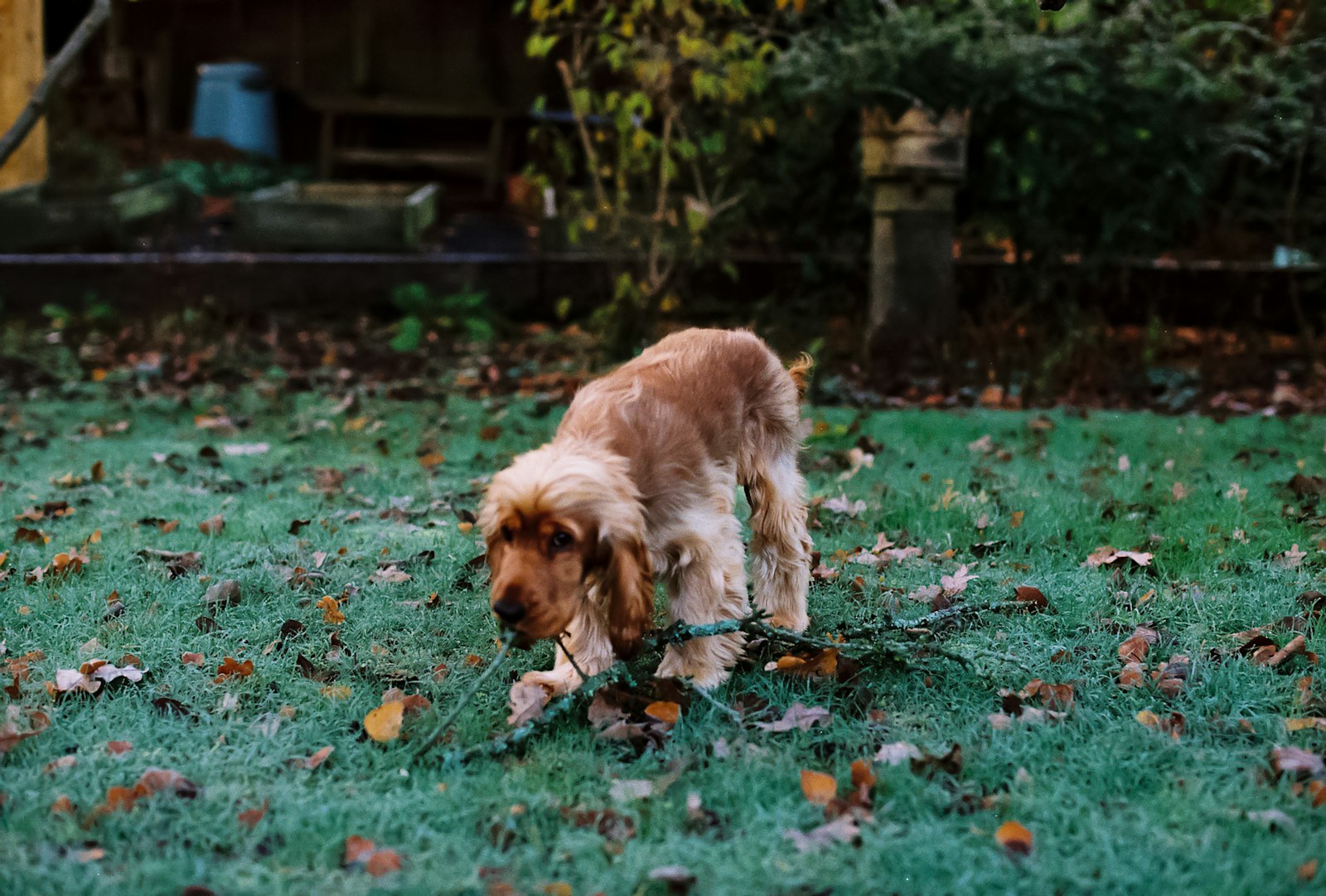
It is a warm evening, you step onto the deck, and the air hits you with something sharp that is nothing like the smell you expected. Not a barnyard smell. More like a litter box. And the yard is clean, because you picked it up two days ago.
That smell is almost never the poop. It is the pee, and it is a different problem with a different fix. We run yards across Greater Cincinnati and Clermont County, and this is the call where the usual advice, scoop more often, does nothing.
Why does my yard smell like dog pee?
Solid waste sits on top of the grass where you can see it. Urine does not. It goes down through the thatch layer, that spongy mat of living and dead grass at soil level, into the top inch or two of soil where bacteria get to work on it. What they produce is ammonia, and ammonia is what you are smelling.
The concentration is the part people miss. Dogs are creatures of routine about where they go, so if your dog has a favorite corner, that corner has taken the whole load all summer while the rest of the lawn has taken almost nothing.
Is it the urine or the poop you are smelling?
You can often see the urine spots before you smell them. Urine burns grass in small patches with a dark green ring around a dead or yellowed center. That ring is the nitrogen fertilizing the edge while the concentrated center gets killed, and it is a reliable map of where to aim your hose.
If you are dealing with the heavier, sour version, that is a thatch and residue problem, and we wrote it up in how to get rid of dog poop smell in your yard. The rinse-then-enzyme order in that post is right for feces odor. It is not right here.
How do you get rid of dog pee smell in your yard?
The sequence that works is shorter than most articles make it:
- Find the spots. Morning walk, nose and eyes. You are usually looking for three or four places, not a whole lawn.
- Soak them, do not sprinkle them. Run the hose on one patch for a minute or two, so the water carries the salts below the root zone.
- Repeat for a couple of weeks. A summer’s worth of buildup does not flush in one evening.
- Rake out heavy thatch. Less matted thatch means better drainage and faster drying, and damp shade is where odor hangs on.
- Change the routine. Leash walks to a different part of the yard, or a designated gravel or mulch potty area, breaks the daily concentration that created the problem.
That last step is the one that ends it. Everything above it is cleanup. If the dog goes back to the same corner every morning, you are signing up to flush it forever.
Why do vinegar, baking soda and lime not fix this?
This is the most common advice online for this smell, so it is worth knowing why it underperforms. According to NC State Extension’s work on dogs and turfgrass, lactic acid has been identified as the main culprit for turfgrass death in urine spots, while the nitrogen causes the dark green response around them. Their practical takeaway: watering within a few hours of urination limits the damage, though it will not undo the dark greening.
So the most effective thing you can apply is water, and it is free. Lime only adjusts soil pH, too much damages grass, and it does not remove what is in the soil. Vinegar adds acid to a spot that is already stressed. Baking soda masks odor on contact and does nothing about the material producing tomorrow’s batch. Enzyme cleaners do have a place on hard surfaces like a patio or a kennel run, but on an open lawn with a season of buildup, water and time do more.
Why is this worse in some Cincinnati yards than others?
Much of Clermont County and the surrounding suburbs sits on heavy clay. Clay does not drain the way sandy soil does, so water and everything dissolved in it lingers in the top layer where the thatch and roots are. A yard here holds urine salts longer than the same yard would in a sandier part of the country.
The dry-spell effect catches people off guard every year. Owners assume rain is the enemy because wet yards smell stronger, and for odor on a given evening that is true. For lawn damage the dry weeks are worse, because without water moving through the soil the salts sit at full strength.
Early fall here is the best window to reseed the damaged patches, while the soil is still warm and the heat has broken. Flush the spots first, wait a couple of weeks, then seed. The opposite order wastes the seed.
Can dog urine in the yard make anyone sick?
We are a pet waste removal company and not a veterinary practice, so the honest version is this: for most households this is a nuisance and a lawn problem, not a health problem.
The exception is worth one paragraph. The CDC’s page on leptospirosis in animals notes the bacteria are spread through the urine of infected animals, can contaminate soil or water and survive there for weeks to months, and that an untreated dog may keep shedding them for up to three months. Dogs commonly pick it up from slow-moving or standing water.
In a backyard that means something small and practical. Do not let low spots hold water for days, and deal with the drainage if your dog drinks from a stagnant corner. The vaccine question belongs with your vet.
When is this worth paying somebody for?
We would rather be straight with you than sell a visit you do not need. If you have three or four ring-marked spots in a residential lawn, the steps above are the whole job, and they cost nothing but hose time.
Where it stops being a homeowner job is scale and surface. A yard where a pack of dogs has been going everywhere for years is saturated rather than spotted, and that needs a deodorizing and sanitizing treatment rather than a hose. Same for kennel runs, decks and patios, where a sanitizing pass does in an hour what rinsing will not do in a month. Property management is the other clear case: apartment communities, HOAs and commercial sites usually call after a resident complaint, and that needs handling on a schedule.
Urine odor and waste buildup usually travel together, and the second does respond to frequency. If you are also fighting piles, our dog poop removal service is the part a schedule fixes, and we covered the timing in how often you should scoop dog poop. The lawn damage side is in is dog poop killing your grass.
We cover Greater Cincinnati, Northern Kentucky and Southeast Indiana, and our service area list runs to more than forty neighborhoods. No contracts, and you get a text when we have been out. Not sure whether your yard is a hose job or a treatment job? Get a free quote or call (513) 518-0262. More on our FAQ page.
Frequently asked questions
Why does my backyard smell like dog pee even though I pick up every day? +
Because picking up only removes the solid waste. Urine soaks straight into the thatch and topsoil within minutes and keeps releasing ammonia from down there as it breaks down. Most dogs use the same few square feet every single day, so one small area absorbs months of it while the rest of the yard stays clean. Scooping is still worth doing, it just was never the thing that was going to fix this particular smell.
Does vinegar get rid of dog urine smell in grass? +
Not really, and it can cost you grass. Vinegar is acidic, and the popular theory it is based on, that dog urine burns lawns because it is too acidic, does not hold up. NC State Extension identifies lactic acid as the main culprit in turfgrass death, with the concentrated nitrogen causing the dark green ring. Pouring more acid on an already stressed spot tends to trade a smell for a bare patch.
How much water does it take to flush dog pee out of a lawn spot? +
More than people expect. A quick pass with the hose wets the blades and evaporates by lunch. You want water moving down through the thatch and into the soil, so think in terms of running the hose on one spot for a minute or two rather than misting the whole yard. Timing matters more than volume. NC State notes that watering within a few hours of urination is what limits the damage.
Can dog urine in the yard actually make someone sick? +
It is uncommon, but the one worth knowing about is leptospirosis. The CDC states the bacteria are spread through the urine of infected animals and can survive in soil or water for weeks to months, and that an untreated dog may shed them for up to three months. That is an argument for keeping standing water down in the yard and for talking to your vet about the vaccine, not for worrying about a healthy dog on a dry lawn.
Do you treat dog urine odor, or only pick up waste? +
We do both, and we will tell you honestly which one you need. Deodorizing and sanitizing is a real service we run across Greater Cincinnati, and it is the right call for a saturated yard, a kennel run, a patio or a property with a complaint on record. If you have one bad corner and a hose, you can very likely handle it yourself with the steps above. Call (513) 518-0262 or get a free quote and we will give you the straight answer.
Rather not deal with it yourself?
Let The Doo Doo Doctor keep your Greater Cincinnati yard clean and fresh. Weekly, bi-weekly or one-time.