
How to Pick Up Dog Poop Without Dreading It
By Matt Tackett, Owner
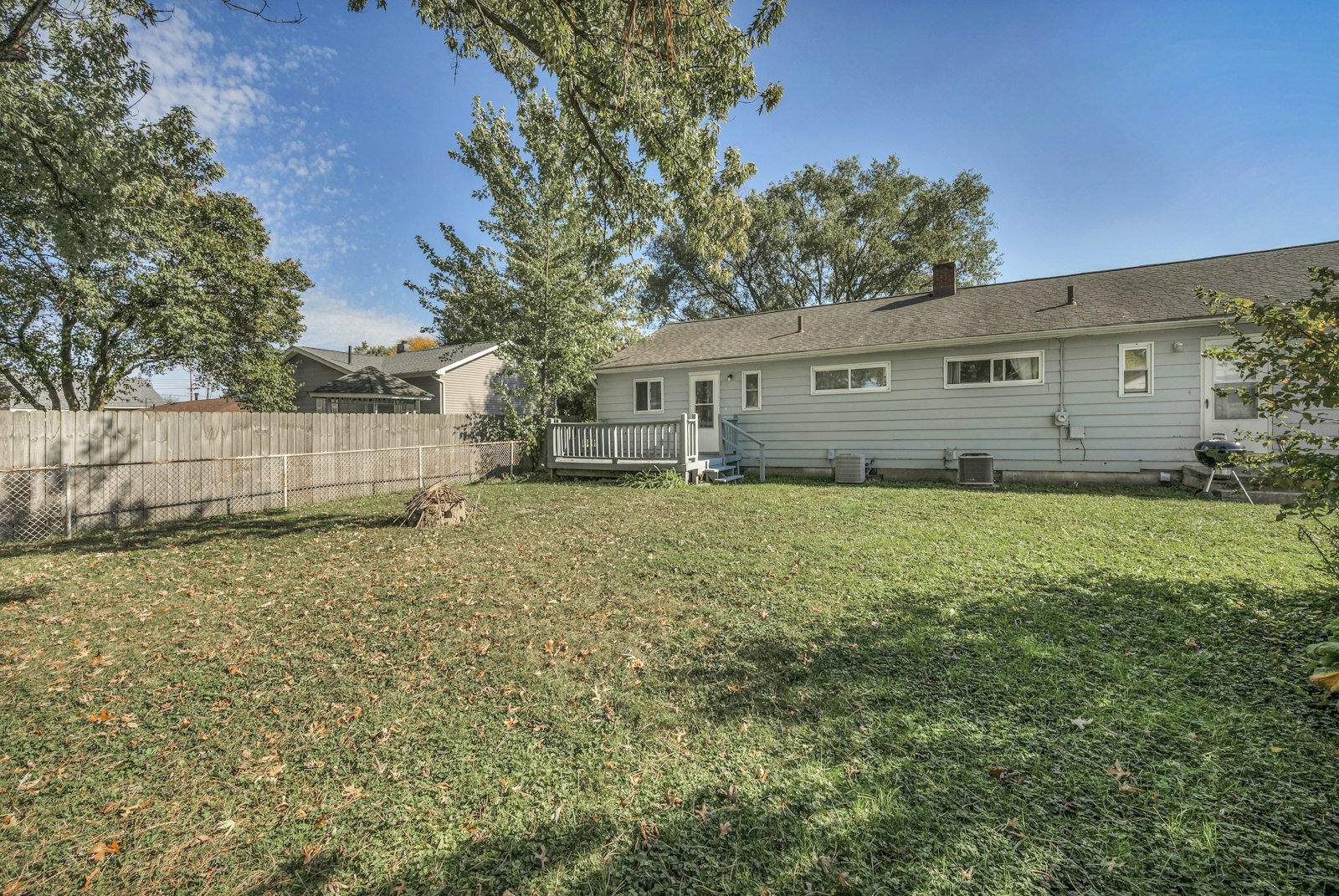
Nobody enjoys this part. The fastest way to pick up dog poop is the one most people do slightly wrong: put your hand inside the bag, take the pile in one confident grab, pull the bag back over your hand so it turns inside out around the contents, and knot it. Four minutes for a normal yard, nothing against your skin, no tool to rinse afterward.
What turns four minutes into a lost Saturday is never the picking up. It is the weekend you skipped because it was raining, the pile you could not find in the mulch bed, and the soft stool that will not lift. Here is how people who do this for a living across Greater Cincinnati handle each one.
What is the fastest way to pick up dog poop?
That is the whole technique, and it is faster than any device. The mistakes that make it unpleasant are small ones. People pinch at the waste with their fingertips through the bag instead of scooping it in one confident grab, which takes three attempts instead of one. People carry four open bags around the yard instead of knotting each one as they go, which is where the smell comes from. And people use bags that are too small, so the plastic ends up against their skin on the second pile.
Get thicker bags than you think you need and knot them the moment they are full. If you are walking the whole yard rather than following the dog around, carry a bucket with a lid and drop the knotted bags in rather than holding them.
Do you need a pooper scooper, or is a bag enough?
There are three tool shapes worth knowing and we will not name a maker for any of them, because the type matters far more than the brand. A scoop and pan is two pieces on long handles, one flat tray and one scraper, and it is the workhorse. A rake and pan swaps the scraper for tines, which is what you want on mulch, leaves and thick grass. Bagging tongs are a one piece jaw that grips a bag around the waste, light and good for a short walk and poor at volume.
What they all buy you is distance and an upright back. What none of them does is find the piles for you, which is the part that actually takes the time. Our own crews carry a scoop and a rake and still spend most of a visit walking.
One thing we see constantly: a tool bought for a two dog yard and then used wrong. If the pan is not flat to the ground, the waste rolls off the lip every time and the whole thing feels broken. Press the pan edge into the turf, bring the scraper to meet it, and lift together.
What do you do when the poop is too soft to pick up?
This is the part no general guide covers and it is the single most common reason people give up on doing it themselves. Firm stool is easy. Loose stool on wet grass is a genuinely hard job, and if it is happening regularly it is worth a word with your veterinarian rather than a better tool.
For the one off, the flat pan is the answer. Approach from the low side, get the lip under rather than into it, and take a little grass with it rather than trying for a clean lift. In winter you can simply wait: five minutes at freezing turns a problem into a non problem, which is the one genuine gift of a Cincinnati January.
How do you find all of it in a big yard?
The piles people miss are predictable, and after a few thousand yards you stop needing to look for them. They are along the fence line, under the deck and the back steps, inside mulch beds and foundation plantings, in leaf litter, and in the long grass at the back corner that the mower rounds off. A dog picks the edges of its territory and the soft shaded ground, not the middle of the lawn where you are looking.
If your yard has genuinely gotten ahead of you, do not do this post’s four minute version. Clearing a backlog is a different job with a different method, and we wrote it up separately in what to do with a yard full of dog poop.
What changes in Cincinnati winter and wet weather?
Our region does not get a clean frozen season. It gets freeze and thaw, over and over, and that shapes the whole job. In a deep cold week you can leave it a few extra days with no real penalty, since nothing is breaking down and nothing is attracting flies. The trap is that a lot of people then stop entirely, and the February thaw surfaces nine weeks of it in a single warm afternoon.
Autumn has its own version. Leaf cover hides piles for weeks, so the yard looks clean right up until the leaves come off and it is not. If you only do one extra pass a year, do it the week before the leaves get raked, and another the week the snow goes. We covered the cold weather specifics separately in dog poop in the snow.
Does it matter how often you do it?
That is the whole hygiene argument in one sentence, and it is why the CDC’s own advice is to pick your pet’s waste up every time and wash your hands afterward. The Companion Animal Parasite Council says the same thing about the timeline, that most ascarid eggs need two to four weeks in the environment to reach the infective stage and are then hardy enough to persist for years.
Practically, that turns a vague chore into a schedule you can hold. One dog, weekly in the cold months and more often in summer. Two dogs, twice a week. Three or more, every other day. The full breakdown is in how often to pick up dog poop, and the longer health piece with its sources is in diseases from dog poop.
Where does it go once you have picked it up?
The storage part is what people get wrong more than the disposal part. An open bucket in the sun is its own problem by Wednesday. Use something with a lid, keep it in shade, and if it has started to smell the issue is almost always the container rather than the yard. We went through the local specifics, including what not to do with it, in where to dispose of dog poop. If the yard itself has started to hold the smell, that is a different fix and it is covered in getting rid of dog poop smell in the yard.
When does doing it yourself stop making sense?
We would rather tell you that plainly than sell you something you do not need. Most of the people who call us are not failing at anything. They had a system that worked for one dog and then got a second, or they had a shoulder done, or the yard turned into something they avoid looking at and the avoiding became the problem.
That is what a scheduled dog poop removal service is for. We come on a set day, we walk the lanes and the fence lines and the mulch beds, and the waste leaves with us rather than sitting in your cart until collection day. Our pooper scooper service covers more than sixty communities across Greater Cincinnati, Northern Kentucky and Southeast Indiana, from Batavia and Milford through Cincinnati itself.
No contracts. New clients get their first month free, restrictions apply. If the yard has gotten ahead of you, get a free quote or call (513) 518-0262. More answers on our FAQ page.
Hero photo by Josh Lemmon on Unsplash.
Frequently asked questions
Is there a device that picks up dog poop for you? +
There are plenty, and most people end up back at a bag or a scoop and pan. The powered and vacuum style gadgets work on firm stool on short mown grass and struggle with everything else, which is most of what an actual yard contains. The tools that hold up over years are unglamorous: a long handled scoop with a flat pan, a small rake to pair with it, and a rigid bin with a lid to empty into. Buy for your back and your yard surface rather than for the novelty.
How do you pick up dog poop without touching it or smelling it? +
Use the bag as a glove and breathe through your mouth. Hand inside the bag, pick up through the plastic, invert the bag around the waste and knot it immediately. The smell gets out when the bag sits open, so knot as you go rather than collecting a pile of open bags. If you are clearing a whole yard, carry a bucket with a lid and drop the knotted bags into it rather than carrying them in your hand.
Does freezing spray actually work? +
On soft stool it genuinely helps, and in a Cincinnati January you get the same effect for free. The aerosols that firm up waste on contact make a mess easier to lift in one piece, which is the entire problem with loose stool. They are a convenience rather than a necessity, and they are no help at all on the part people actually dread, which is finding every pile in the first place.
What is the best way to pick up dog poop out of mulch, leaves or rock? +
Change the tool, not the effort. In mulch beds and leaf litter a bag alone just smears it into the bedding, so use a small rake to roll the pile onto a flat pan and take a little of the mulch with it. On river rock, let it firm up first and lift from underneath. The honest answer on landscape rock is that it is the hardest surface there is, which is why our crews slow down on it and why rock beds are where backlogs hide.
How often do you have to pick up dog poop in your own yard? +
One dog, once a week is usually enough through the cold months and not enough in summer. Two dogs doubles the material, and three or more means every other day if you want the yard usable. Beyond the volume there is a timing reason to keep it tight: the CDC notes that roundworm eggs shed in dog feces need 2 to 4 weeks in the environment to develop to the point where they can cause infection, so waste that leaves your yard inside a week never reaches that stage. We broke the schedule down by dog count in our post on how often to pick up dog poop.
Rather not deal with it yourself?
Let The Doo Doo Doctor keep your Greater Cincinnati yard clean and fresh. Weekly, bi-weekly or one-time.