
Dog Waste Station for Your Backyard: Does It Actually Work?
By Matt Tackett, Owner
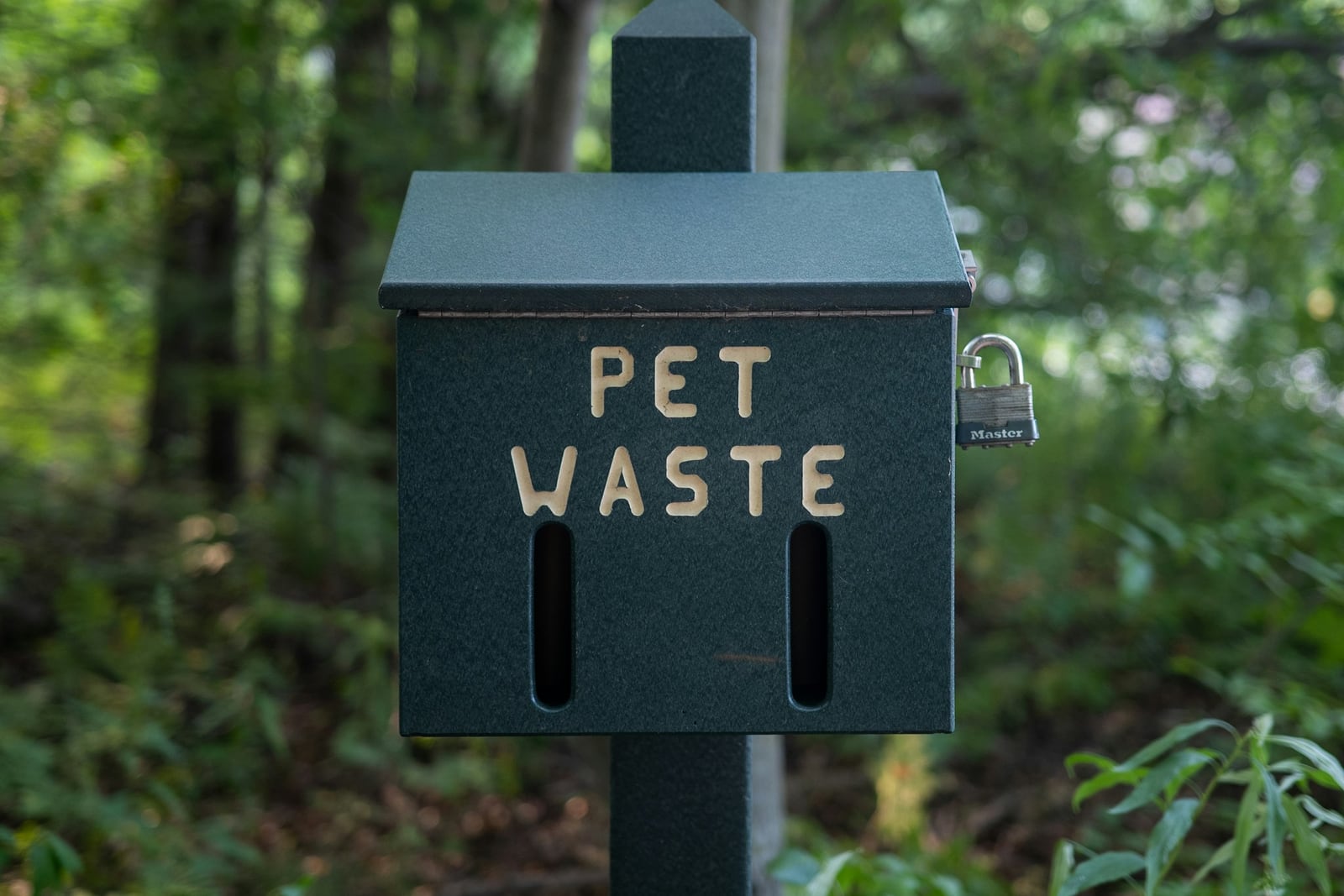
Search for a dog waste station and you get eighteen companies selling you one. Steel posts, powder coating, bag rolls by the case, a lock for the lid. Not one of those pages tells you the thing worth knowing before you spend the money, which is what a station actually does once it is in the ground.
So here it is from somebody who installs and services them for a living across Greater Cincinnati and Clermont County, and who has no station to sell you today. A dog waste station is a bag dispenser and a bin. That is the product. Whether it belongs in your backyard comes down to whether a bag dispenser and a bin were ever the thing standing between you and a clean yard.
What is a dog waste station, exactly?
That sounds obvious written down, and it is still the most common misunderstanding we run into. People picture something closer to a compost tumbler or a small septic unit. What arrives is a bag holder and a trash can with a better lid on it.
That is not a criticism. On the right property it is exactly the right tool. It just means the question is never “is this a good station.” The question is whether storage was the part that was broken.
Does a dog waste station work in a backyard?
Be honest about what actually happens at your house. If the reason the yard gets away from you is that the bags live in the garage and the scoop is behind the mower, then yes, putting everything together by the back door fixes a real problem. You can do that with a hook and a lidded can for about the price of a pizza.
If the reason is that nobody feels like going out there, no amount of hardware touches it. That is the part most of the search results will not tell you, because most of the search results are selling the hardware.
Where we do see backyard stations earn their keep is multi dog households. Three dogs produce enough volume that the trip is worth making anyway, and having the bin ten steps from the problem instead of fifty makes a real difference to whether it happens daily.
Where should you put one so it actually gets used?
This is most of the job on commercial properties, and it is why we walk a site before we install anything. Residents do not detour. They bag it if the bags are in hand, and they bin it if the bin is on the way to their car.
The same logic scales down to one yard. Put it at the back door or on the gate side, not in the far corner where the dog prefers to go.
What about in ground dog waste disposal systems?
This is the upgrade people buy after a station disappoints them, so it is worth being straight about. The unit is doing a miniature version of a leach field. OSU Extension’s work on using soil to treat wastewater describes the dense glacial tills beneath many Ohio soils as having little porosity and a low capacity to move water or air, and says dense till can block water from moving away from a site. A buried digester needs the exact opposite of that.
OSU’s soil evaluation guidance is just as plain on texture: clay heavy soils are the least permeable, and dense clay restricts the movement of air and water. If you already know your yard holds puddles after a storm, you have your answer before you dig.
Does a station make the yard any safer?
The CDC’s guidance on how toxocariasis spreads is worth reading if small children use the yard. Eggs need two to four weeks in the environment before they can cause infection, and people pick it up by accidentally swallowing contaminated soil, which in practice means hands and toys. Prompt pickup lands inside that window. A bin that waste reaches on day ten does not.
Worth knowing as well: once eggs are in the soil, cleaning does not undo it. The Companion Animal Parasite Council’s ascarid guideline states that common disinfectants are not effective against them. We say the same thing to customers who ask whether our deodorizing service sterilizes a lawn. It does not, and removal is the part that works. There is more on the timing of all this in our post on what lingers in dog waste and for how long.
What does a Cincinnati winter do to a backyard station?
If you are keeping a station through the winter, site it where it gets afternoon sun and keep the lid seal clear. And accept that frozen waste is genuinely harder to lift, which is the part of this job our crews notice most between January and March.
When is a station the right call, and when is it not?
On a managed property the hardware is the fix, because the problem is other people’s behavior and a station is the cheapest way to change it. We install and service pet waste stations across Greater Cincinnati and Northern Kentucky, keep the dispensers stocked, swap the liners and take the waste with us, usually on the same visit as scheduled commercial pet waste removal for the lawns and courtyards. That combination is what residents experience as a clean community. There is more on the resident side of it in our piece on apartment complex pet waste removal.
At a single home the honest version is usually different. If the yard has gotten away from you, the fix is frequency, not equipment. Our recurring dog poop removal service is a scheduled visit where somebody else walks the lawn and the waste leaves in our truck, and most customers find that is what they wanted when they started shopping for a station. If you want to know how often your yard really needs it, we worked through that in how often you should scoop, and the lawn side is covered in whether dog poop is killing your grass.
We cover more than sixty communities across Greater Cincinnati, Northern Kentucky and Southeast Indiana, from Batavia and Milford out through the full service area. No contracts, and you get a text when we have been out. Want a straight answer about whether a station is worth it on your property? Get a free quote or call (513) 518-0262. More on our FAQ page.
Hero photo by Tyler Lagalo on Unsplash.
Frequently asked questions
How do you make a DIY dog waste station? +
A lidded outdoor bin with a liner, a bag roll in a weatherproof holder, and a long handled scoop hung next to it. That is honestly the whole thing. The expensive part of a commercial station is the powder coated steel and the lock, which matter on a public path and do almost nothing in a fenced backyard. If you build one, spend the money on the lid seal rather than the post. A loose lid is what turns a station into a smell problem in July.
Do dog waste stations help with the smell? +
A sealed bin contains odor better than an open trash can, and it keeps flies off what is inside. It does nothing about odor already in the lawn, which is usually soil that has been soaked repeatedly rather than the piles themselves. If the yard smells and the piles are gone, the station was never the problem. Empty the bin on the same day your trash goes out and it stays manageable even in a humid Cincinnati August.
What do you do with the bag once the station bin is full? +
It goes in your household trash, bagged and tied. A backyard station is a staging point, not a disposal method, and nothing inside it breaks down on its own while the lid is shut. That surprises people who expected the bin to be the end of the process. On the commercial properties we service, the liner leaves with us on the scheduled visit, which is the real difference between a station at a home and a station on a managed property.
Can I put a dog waste station in a rental or an apartment yard? +
Ask the property manager first, and ask who empties it. Most apartment communities would rather install and service stations themselves than have residents mounting posts, and many already have a waste removal plan in place. If yours does not, that conversation usually goes better than people expect. Overflowing bins and complaints about the lawn are two of the things property managers hear most often, so a resident raising it is doing them a favor.
Do you install pet waste stations for a single home? +
We can, and sometimes it is the right answer, usually when a household has several dogs or someone cannot carry waste far. More often we will tell a homeowner that a recurring pickup solves what they are actually frustrated about, with nothing to stock or empty. Our station work is mostly for HOAs, apartment communities, parks and veterinary offices across Greater Cincinnati and Northern Kentucky. Call and we will tell you honestly which one fits your yard.
Rather not deal with it yourself?
Let The Doo Doo Doctor keep your Greater Cincinnati yard clean and fresh. Weekly, bi-weekly or one-time.