
Maggots in Dog Poop: Why They Show Up and How to Stop It
By Matt Tackett, Owner
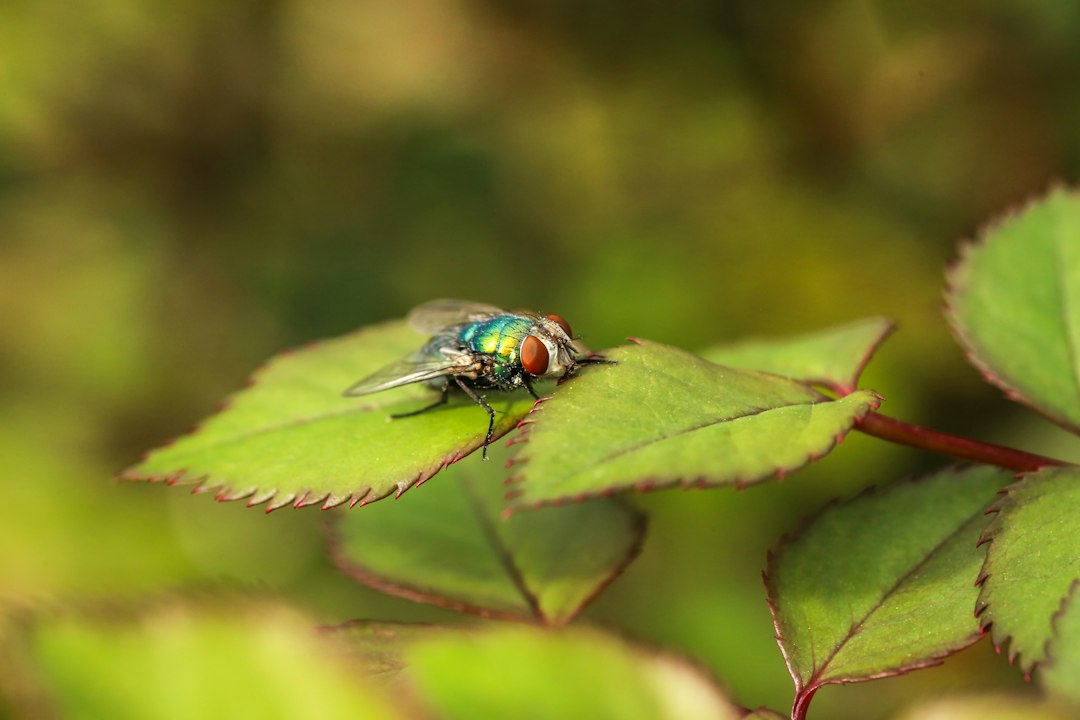
You walked the yard, found a pile that had been sitting a few days, and it was moving. The first question almost everyone asks is whether something is wrong with the dog. Usually nothing is. What you found is a fly problem wearing a disguise, and it has a short list of real fixes and a long list of things that do not work.
Are maggots in dog poop worms from my dog?
Both things are pale and small and nobody wants to look closely, so the confusion is understandable. The tell is timing. Intestinal worms are visible in stool the moment it is passed. Maggots are not, because they turn up on waste that has sat outside a day or more. If the pile was clean on Tuesday and crawling on Friday, it was flies.
The two problems also get solved in different places. One is a yard job. The other is a veterinary job, and VCA Animal Hospitals has a straightforward guide on what to do if you see worms in your pet’s poop. We scoop yards across Greater Cincinnati. We are not a veterinary practice and we will not diagnose a dog from a photo.
How fast does this actually happen?
Penn State’s pest management figures also note that one female can produce up to six batches of 75 to 200 eggs at three to four day intervals. Blow flies, the metallic green and blue ones that find waste within minutes, move faster still: University of Minnesota Extension says blow fly maggots often reach full size on the second or third day after hatching.
Read against a Cincinnati calendar, that means waste left out over a July weekend can carry larvae by Monday, while in late October, with nights in the forties, the same pile takes most of a month. That swing is why the problem seems to appear from nowhere in June and quietly stops on its own in November.
What actually stops it
University of Kentucky entomologists put it plainly: wet waste is essential for fly development, and a control program not built on removing it will not hold. Their context is livestock. The biology does not change in a backyard in Anderson Township.
What works, in the order it matters.
Clear what is already out there, all of it. A once-over of the open lawn misses the spots producing the most flies. Shade holds moisture, and moisture is the requirement, so the fence line, the mulch bed and the strip under the deck are where the active material is. If the yard has gone a season, that is a cleanup rather than a tidy-up, and we covered it in clearing a yard full of dog poop.
Then keep a schedule tight enough to beat the clock. Larvae need four to seven days on the pile to mature, so remove waste twice a week and nothing finishes developing. Daily is better, but twice a week is the threshold where the cycle actually breaks. More on cadence in how often you should scoop dog poop.
Rinse the hard surfaces. Residue on a patio or concrete pad still draws flies after the pile is gone, and it is the same residue driving the smell, which we covered in getting rid of dog poop smell in the yard.
Keep bagged waste sealed and shaded. An open bucket by the back door in August is a fly nursery with a handle on it.
Why the sprays keep letting you down
Every summer somebody tells us they tried a yard spray, a hanging trap and a home remedy from the internet, and the flies were back in four days. Of course they were. Four days is roughly how long the batch already in the grass needs to finish.
We are not an exterminator and we do not sell a treatment. We remove what the flies are using, which is the only step here that reliably works. The pile brings other visitors too, and we covered the worst of them in does dog poop attract rats.
The health part, briefly and with a source
The CDC’s guidance on how toxocariasis spreads describes eggs with a protective layer tough enough to persist long after the waste itself is gone, and recommends picking waste up daily and bagging it for the trash. That is the same answer the fly biology points to, so one habit covers both. If the health side is what brought you here, we laid it out with sources in diseases from dog poop.
On shared property this gets bigger
That is what generates resident complaints, and it is nearly always a service frequency problem rather than a resident behavior one. Sealed pet waste stations emptied on schedule solve it; left to fill through August they become the worst spot on the property. If you manage shared ground, our commercial pet waste removal page covers it.
When you should just hand it over
Most of the people who call us in July are not failing at anything. They were scooping weekly, which is fine in March and is not fine when the cycle runs in ten days, and the yard got away from them inside a fortnight.
That is what a scheduled dog poop removal service is for. We come on a set day, clear the parts of the yard that are easy to skip, and the waste leaves with us rather than sitting in your cart until collection. Our pooper scooper service covers more than sixty communities, from Batavia and Milford out through Mason and Northern Kentucky. Full list on our service area page.
No contracts. New clients get their first month free, restrictions apply. If the yard has gotten ahead of you, get a free quote or call (513) 518-0262. More on our FAQ page.
Hero photo by Giorgio Trovato on Unsplash.
Frequently asked questions
Are the maggots in my dog's poop worms that came out of my dog? +
Almost always no. Maggots are fly larvae, pale and legless and tapered at one end, and they appear on waste that has been sitting outside for a day or more. They got there because an adult fly landed and laid eggs. Intestinal worms are a separate problem with a separate look, and the tell is timing: worms are visible in stool the moment it is passed, while maggots show up later on waste that has been sitting. If you are seeing something in fresh stool, that is a conversation with your veterinarian. VCA Animal Hospitals has a plain guide on what to do if you see worms in your pet's poop, and we are a pet waste removal company, not a veterinary practice.
How fast do maggots appear in dog poop? +
Fast enough to surprise people. Penn State Extension's figures put house fly egg hatch at 12 to 24 hours, with maggots completing development in 4 to 7 days and a pupal stage of 3 to 4 days after that. The whole cycle takes about 10 days at 85 degrees and 21 days at 70 degrees, so a July pile moves roughly twice as fast as an October one. In practice, waste left over a hot Cincinnati weekend can have larvae on it by Monday.
How do I get rid of flies around dog poop in the yard? +
Take away what they are breeding on. Flies in a backyard are not wandering in from somewhere else at random, they are being produced on site, and the production stops when the waste does. Clear everything currently out there, including the shaded spots along the fence and under the deck where nobody looks, then keep to a schedule tight enough that no pile sits for the four to seven days larvae need. Rinse down any hard surface that has been a regular spot. Keep the lid on whatever container you store bagged waste in, because an open bucket in the sun is its own breeding site.
Does fly spray or a yard treatment fix it? +
Not on its own, and plenty of people have spent a summer proving it. University of Kentucky entomologists are direct about this: wet waste is essential for fly development, and chemical control works only alongside waste management, not instead of it. Spraying adults kills what is flying today while the next batch is already developing in the grass. If the breeding material is still out there, you are mowing the lawn with scissors.
Can maggots in dog waste make my family sick? +
The maggots themselves are a nuisance rather than the main hazard. The real health argument for getting the waste out of the yard is what is in the waste. The CDC notes that roundworm eggs shed in dog feces can survive in soil for months or even years, which is why its guidance is to pick waste up daily and bag it for the trash rather than let it break down in place. We wrote more on that in our post on diseases from dog poop. Wash your hands after handling waste, whatever stage it is at.
Do pet waste stations attract flies? +
A serviced one does not. An unserviced one absolutely does, and that is usually what people are reacting to when they say this. A station is a sealed bin with a lid, and emptied on a schedule it is the cleanest option on a shared property. Left to fill through August it becomes the single best fly breeding site on the whole community, which is the complaint property managers end up fielding. The bin is not the problem, the emptying schedule is.
Rather not deal with it yourself?
Let The Doo Doo Doctor keep your Greater Cincinnati yard clean and fresh. Weekly, bi-weekly or one-time.